
How Bench Warrants Work in Anne Arundel County
Think of a bench warrant as the court's enforcement order. It opens no new criminal case. Something already before the court simply went undone. Maybe an appearance was missed. Maybe a condition went unmet. Maryland Rule 1-202 spells out who may sign one. In the District Court of Maryland for Anne Arundel County, that means a judge or a District Court commissioner. In the Circuit Court for Anne Arundel County, a judge signs it, or the clerk does on a judge's written and docketed order. The Anne Arundel County Sheriff's Office serves the warrant, with the County Police Department assisting under Police Written Directive 2110. And the court that issued the process is the only one that can undo it.
What Triggers a Bench Warrant in This County
Missed court dates top the list of triggers in Anne Arundel County. The note to Maryland Rule 1-202 names enforcement of an order to appear, a probation violation, and a contempt petition. Traffic cases run on their own track. A must-appear citation warns right on its face that failing to appear may bring an arrest warrant. A missed trial date can also bring a license consequence through the Motor Vehicle Administration. Not every unpaid ticket becomes a warrant, though. The citation's instructions and the court record control. Two other triggers get misread often. A probation violation can produce new process. A body attachment in a family matter is a separate instrument, not a bench warrant at all.
Bench Warrant Issuance in Anne Arundel County
Issuance in Anne Arundel County runs on paper plus a docket entry. The court records the event. The process then goes to the sheriff for service. It becomes executable once entered in the law enforcement systems that confirm it. None of this creates a public bench warrant registry. The sheriff's published list has no warrant-type column and covers only older unserved county warrants, so the court file is where the event itself is recorded.
Annapolis and Glen Burnie: Where an FTA Is Handled
Counter questions go to the court clerk. Both District Court locations in Anne Arundel County share the same statewide jurisdiction, and the building printed on the citation decides which one you call about a warrant or filing.
| Court | What It Hears | Bench Warrant Role | Contact |
|---|---|---|---|
| District Court, Annapolis | Traffic, misdemeanors, certain felonies, civil claims, landlord and tenant | Judge or commissioner issues process; commissioner handles satisfactions and surrenders | 251 Rowe Boulevard, Annapolis; (410) 260-1370 |
| District Court, Glen Burnie | The same District Court categories | The same authority, with a commissioner office identified as available around the clock | 7500 Governor Ritchie Highway, Glen Burnie; (410) 260-1800 |
| Circuit Court | Serious criminal, major civil, family and juvenile, appeals from District Court | Judge, or clerk on a judge's written and docketed order | 8 Church Circle, Annapolis; clerk (410) 222-1397; criminal (410) 222-1420 |
Maryland has no municipal or justice-of-the-peace court, so no city bench warrant clerk exists anywhere in Anne Arundel County.
How Bench and Arrest Warrants Differ
The two look alike in a table row. In Anne Arundel County courts they behave differently, and that difference decides which office you call and what a resolution takes.
| Question | Bench Warrant | Arrest Warrant |
|---|---|---|
| What starts it | A missed appearance, a violation, or a contempt petition | A criminal charge supported by probable cause |
| Who issues it | Judge or commissioner in District Court; judge or clerk on order in Circuit Court | District judge or commissioner; Circuit judge or clerk on order |
| What it does | Enforces an order already in a pending case | Authorizes taking a person into custody on a charge |
| What clears it | A recall, a new date, an appearance, or a satisfaction, decided by the court | Court action on the charge, bond, or another court-ordered resolution |
It is the court's way of restarting a stalled case. In Anne Arundel County, that is why the fix usually involves the underlying file rather than the warrant itself.
Safe Surrender and the Recall Path
Anne Arundel County offers two routes, and people often blend them into one. Safe Surrender is the arranged, operational path. A recall is a court decision. Safe Surrender starts with a call to the warrant line. A deputy verifies the warrant, arranges a meeting at a pre-designated location, and coordinates transfer to the Central Holding and Processing Center for service and an initial appearance before a commissioner. The county's Safe Surrender page spells out what to plan for. It covers transportation, child care, a work absence, and possible bail-bond service.
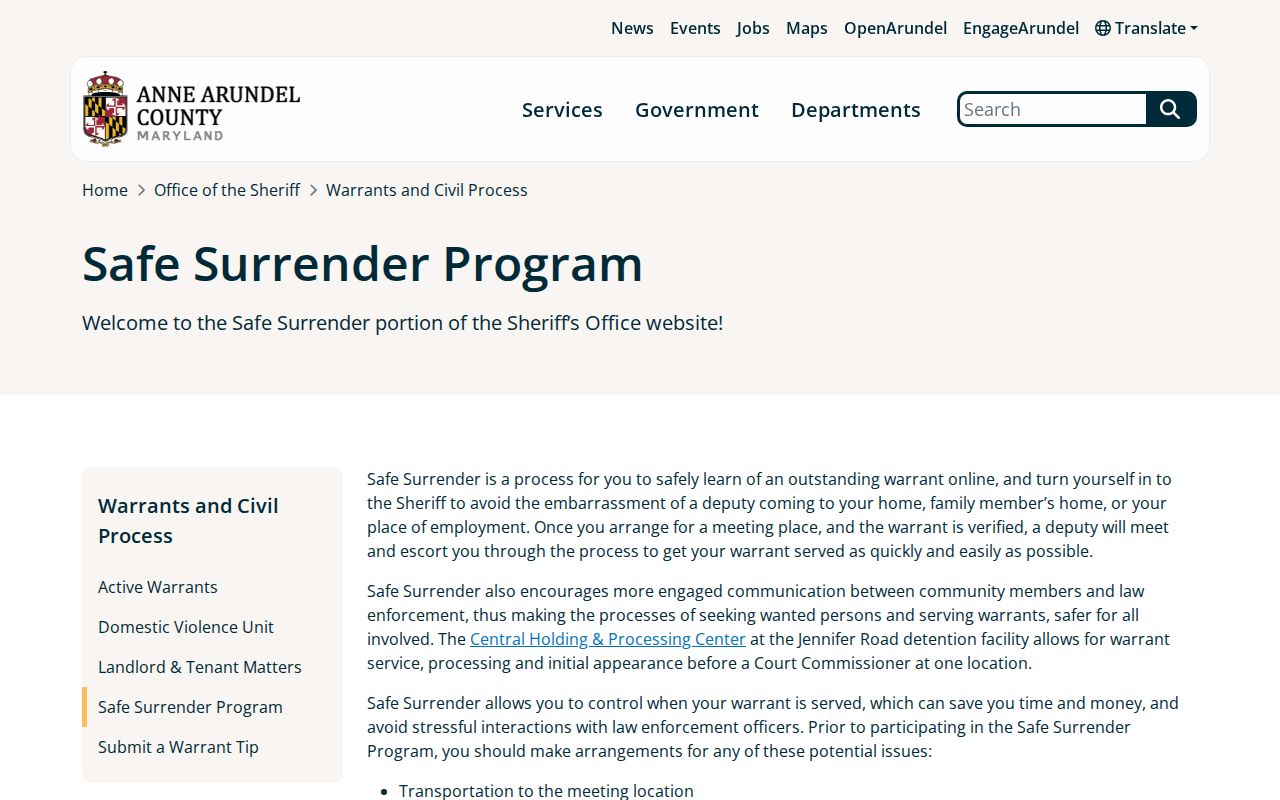
That page also carries the recall guidance for Anne Arundel County. If the warrant issued in error, or a legitimate reason caused the missed date, a motion may ask the originating court to recall it. Only the court decides. The sheriff cannot quash anything.
Clearing a Bench Warrant in Anne Arundel County
Resolution starts with identifiers and ends with a court order in Anne Arundel County. Gather the case number, the court location, and the approximate date the warrant issued, then work the two calls in order.
Caution: A call to the sheriff does not cancel enforcement. Until the court recalls the warrant or you are processed through a surrender, an encounter with any officer can still lead to arrest.
The court controls the outcome. It decides whether a recall is granted, what a new date looks like, and what release conditions apply. Anne Arundel County publishes no recall form or filing fee, so the clerk has to describe the current route for that case. Bond is separate. Maryland routes bond payments to the District or Circuit Clerk during business hours. Outside them, payments go to the Commissioner's Office.
A Commissioner Office Is Not an Overnight Records Counter
Commissioner service in Anne Arundel County runs at hours when the clerks are closed. The operational map puts Glen Burnie and the Central Processing Unit at Jennifer Road around the clock. The Annapolis ground-floor office keeps weekday hours. That availability covers specific functions: initial appearances, bail, preliminary inquiries, statements of charges, and bench-warrant satisfactions and surrenders. It is not a records window. File and copy questions still wait for clerk hours.
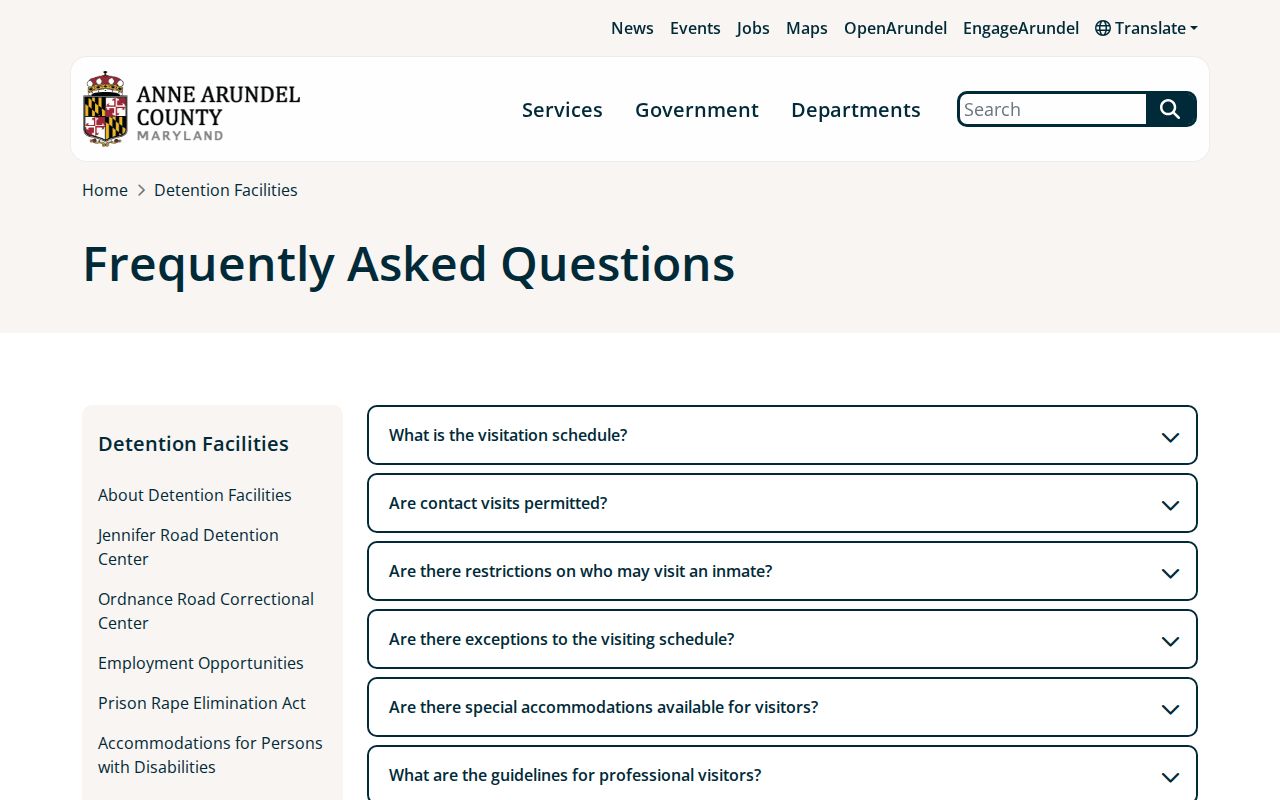
Jail staff in Anne Arundel County do not take bail payments, the detention guidance warns. A bond payment follows the clerk and commissioner schedule instead. The guidance is posted at aacounty.org/detention-facilities/frequently-asked-questions.
Maryland Process Labels: Capias, Attachment, Contempt
Maryland forms carry captions that do not mean the same thing. Borrowing another state's vocabulary can send an Anne Arundel County reader to the wrong office.
- State capias
- The Circuit Court caption for an arrest warrant, used on the statutory form under Courts and Judicial Proceedings §2-107.
- Body attachment
- Process directing that a person be brought before the court on a compliance, family, or contempt matter.
- Contempt warrant
- Process tied to an alleged failure to comply with a court order. The underlying proceeding is what matters.
- Recall
- A court decision withdrawing the process after a motion, an error, or a legitimate missed date.
- Satisfied
- A commissioner or court action marking the warrant obligation addressed while the case continues.
A capias pro fine label collects unpaid fines elsewhere. Anne Arundel County publishes no separate public workflow for that wording. An out-of-state document using it will not match the process here.
Anne Arundel County Courts That Issue Bench Warrants
Where your case was filed decides which Anne Arundel County court you call. Two levels here issue bench process. The District Court takes traffic, misdemeanors, certain felonies, and smaller civil matters, with buildings in Annapolis and Glen Burnie. Its judges and commissioners issue the process. The Circuit Court sits above it. Serious criminal cases, major civil matters, family and juvenile cases, and appeals land there. Its family and criminal divisions both generate enforcement process, and the Circuit Clerk maintains those files. An appeal from a District Court decision moves the matter up a level. The issuing court changes with it. The Orphans' Court handles probate, not criminal warrants. Check the court off your case number before calling, since a clerk in the wrong building can only redirect you.
Confirming the Bench Warrant Was Cleared
A satisfied warrant can still show as active for days. The Anne Arundel County sheriff's weekly upload lags. Case Search lists summary events that may not reflect a filing the moment it happens. So get the paper first. A court order, docket entry, or commissioner satisfaction receipt is the evidence that something changed. Then recheck the public systems and keep the next appearance date. Recall or satisfaction does not dispose of the case, and the underlying charge or family obligation continues on its own track, where a missed condition can generate new process.