
How Arrest Warrants Work in Anne Arundel County
An arrest warrant orders a peace officer to take one named person into custody. Maryland Rule 1-202 puts the issuing authority with the courts. In the District Court, a judge or a District Court commissioner may sign one. A Circuit Court arrest warrant comes from a judge, or from the clerk acting on a judge's written and docketed order. The Anne Arundel County Sheriff's Office counts arrest warrants among the court orders it clears and serves, and it calls itself the county's primary clearinghouse for those documents. The paper is not the charge itself. It is the mechanism that brings a person before the court on a charge that already exists.
Note: An arrest warrant is an enforcement tool, and a charge in the file is an allegation rather than a finding.
The Original Warrant and the MILES/NCIC Entry Chain
Paper runs this process, and Police Written Directive 2110 explains why. The original warrant from a law enforcement agency goes into the commissioners and sheriff's pickup bin, and the Sheriff's Office needs that original before entering the warrant into MILES and NCIC, the systems an officer anywhere uses to confirm it is executable. The directive sets internal deadlines that keep the chain moving. The Sheriff gets immediate notification. A scanned return follows within three hours, and the original is required afterward. No website in Anne Arundel County replicates that system. That is why a public listing stays a lead until a Maryland agency verifies it.
Arrest Warrants: What They Contain
The Circuit arrest warrant form carries identifying fields, administrative details, the charge, and the issuing authority. Courts and Judicial Proceedings §2-107 governs it, and the same form serves Anne Arundel County.
| Caption | The process label, which for a Circuit criminal file reads as an arrest warrant or State capias. |
|---|---|
| Charge or Order Basis | What the complaint, statement of charges, or indictment asserts. |
| Identifying Fields | Full name, last known address, race, sex, height, weight, hair and eye color, and distinguishing marks or scars. |
| Records Identifiers | Driver's license information and Social Security number fields, used to confirm the right person. |
| Issuing Authority | The judge or commissioner who signed it, with the date and the court. |
| Return Instructions | Which agency serves it and where the return of service goes. |
Those identifying fields exist to stop an arrest of the wrong person. A warrant is not a document to republish. The public-facing identifier in Anne Arundel County is the warrant number in WARRANT-000000 form.
Who Serves an Anne Arundel Arrest Warrant
In Anne Arundel County, the Sheriff's Office takes the lead on serving an arrest warrant. Partner agencies help out when the assignment calls for it. Directive 2110 keeps criminal warrant service apart from civil process, which the County Police Department does not serve.
| Agency | Service Role Here | Route |
|---|---|---|
| Anne Arundel County Sheriff's Office | Primary clearinghouse and service agency, with Warrant Teams and Document and Warrant Control | (410) 222-1570; Document & Warrant Control (410) 222-1490 |
| Anne Arundel County Police Department | Assists the Sheriff and handles local arrests and transport under the directive | Sheriff warrant notification (410) 222-1570 |
| Annapolis Police Department | City law enforcement partner, with no separate city warrant portal | Main (410) 268-9000 |
| Maryland State Police | Named coordination partner on the sheriff's warrants page | State police directory |
Maryland's structure gives Anne Arundel County no county constable or city marshal warrant office. No second local serving agency exists beyond these.
How Warrants Get Served in Anne Arundel County
Serving a warrant in Anne Arundel County happens in the field, and the officers doing that work run off the entered warrant rather than any public table. After an arrest, the person is transported to the Anne Arundel County Central Holding and Processing Center, where the warrant is signed and served and a return of service goes back to the originating agency. Warrant Teams sit inside Field Operations. So do the Civil Process Unit, Document Control, the Domestic Violence Unit, the Communications Center, and K-9.
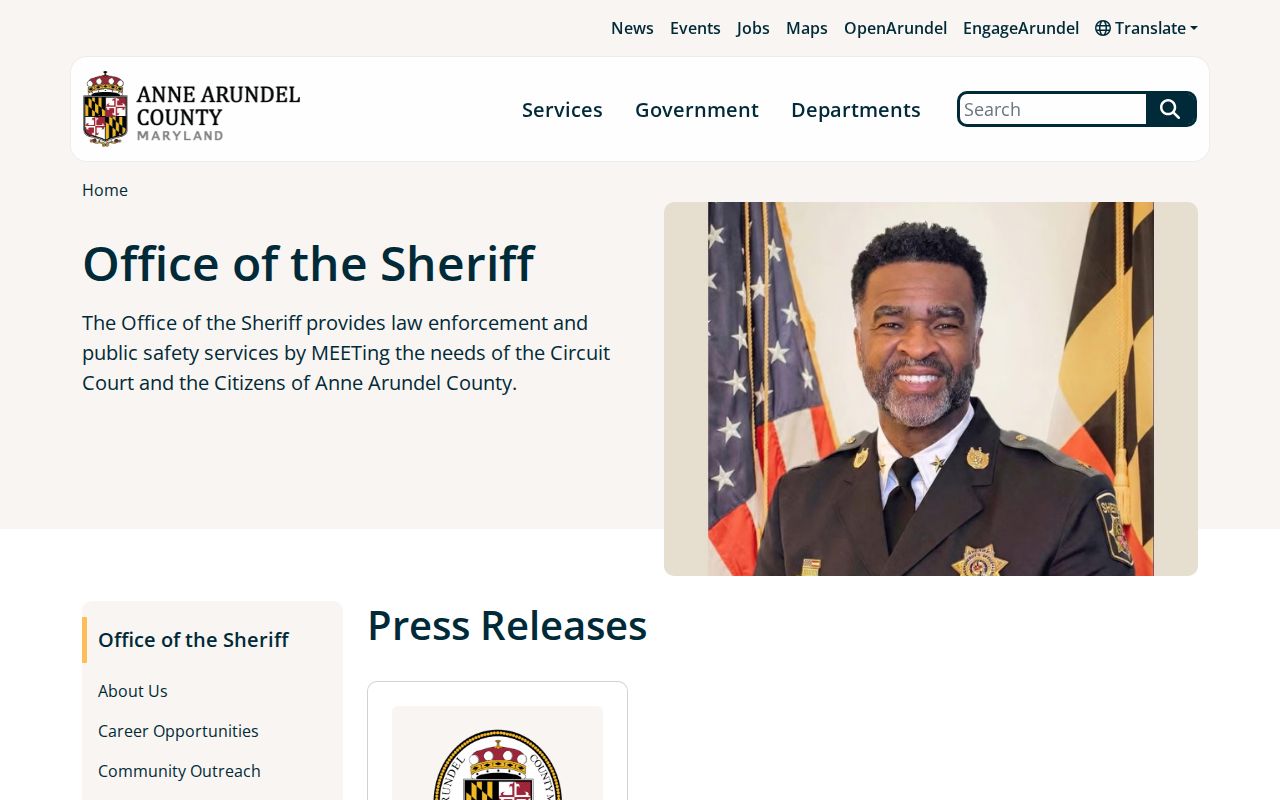
The sheriff's site publishes administration and Field Operations contacts for Anne Arundel County. That page is how a reader reaches the unit handling service questions, at aacounty.org/sheriff.
County Fugitive Teams and the Federal Task Force
Some arrests need more than a local warrant team. County police releases from 2026 describe the Anne Arundel County Police Fugitive Apprehension Team working with the U.S. Marshals Capital Area Regional Fugitive Task Force and executing an arrest warrant the following day. A second 2026 release describes detectives obtaining an arrest warrant, coordinating with Baltimore Police, and locating the person in another Maryland county. Service can cross jurisdiction lines. The paperwork still belongs where it started. A federal warrant stays federal, whoever makes the arrest.
Arrest Warrants, Summonses, and Bench Warrants
Three instruments reach the same Anne Arundel County courthouse and mean different things. Mixing them up sends a reader to the wrong office. It also sets the wrong expectation about what happens next.
| Instrument | What It Does | How It Arises |
|---|---|---|
| Arrest warrant | Authorizes taking a person into custody on a charge | A complaint, statement of charges, or indictment supports probable cause |
| Summons | Orders a person to appear without an arrest | Filed by the court as an alternative to custodial process |
| Bench warrant | Enforces an order or appearance already owed to the court | A missed date, probation violation, or contempt petition |
| Sealed indictment | Charges a person while the charging document stays closed | Returned by a grand jury and withheld until unsealed or served |
A sealed indictment trips up readers most. Nothing appears publicly until it is unsealed, so an Anne Arundel County search showing nothing does not prove the absence of a charge.
Juvenile Arrest Process and Its Privacy Line
Juvenile matters run through the same courts with stricter access rules. Maryland law keeps juvenile court records confidential. They come out only by court order. The sheriff's category list treats juvenile detention orders in Anne Arundel County as their own document family, with distinct handling and destination requirements. One narrow exception exists. Maryland law lets police enter an outstanding juvenile writ or warrant so officers can apprehend the person. That exception is an operational tool for law enforcement, not a public roster, and nothing in it authorizes a juvenile name to appear in a public warrant list. A family asking about a juvenile matter should expect the court to require authorization before discussing the file.
Handling an Arrest Warrant in Your Name
Three paths exist in Anne Arundel County. An arranged Safe Surrender is one. Custody followed by bond or release terms set by a judge or commissioner is another. A third is a motion asking the originating court to recall the warrant, and all three go better with counsel than alone.
Important: Speak with a lawyer before arranging a surrender, and never approach a last-known address or confront anyone, because an arrest warrant can be executed at any contact with law enforcement.
Anne Arundel County runs a Safe Surrender program, and it begins with one call. Dial the sheriff's warrant line at (410) 222-1570. A deputy confirms the warrant, sets a meeting at a pre-designated spot, and arranges the transfer to the Central Holding and Processing Center. The program page walks through the prep work, from transportation and child care to possible bail-bond arrangements. One thing stays true, though. Turning yourself in clears the warrant, not the case, which keeps its own next date on the court's calendar.
After Custody: Central Holding and Processing
The Jennifer Road processing center takes detainees from any Anne Arundel County agency that makes an arrest. Intake means a search, an interview, and fingerprinting. After that, the person waits for a commissioner hearing before any move to the detention center for medical checks and classification. That first appearance is where the real questions get raised: the statement of charges, counsel, bond, conditions, and the next setting. Do not bring bail money to the detention facility. During business hours, payment runs through the District or Circuit Clerk. After hours, it goes through the Commissioner's Office instead. Before you drive over, call ahead. The county's own pages give the center's address two ways, once as 131 Jennifer Road and once as 133 Jennifer Road, so confirm the entrance by phone.
Why the County List Is Not a Federal Warrant List
Federal warrants do not show up on the sheriff's table, and there is a reason why. Anne Arundel County sits inside the federal District of Maryland, and federal process stays federal. The sheriff's published list covers only unserved Anne Arundel County warrants. Nothing from a U.S. case will ever appear on it. Federal records sit elsewhere entirely. The U.S. District Court for the District of Maryland holds the federal criminal dockets, PACER gives account-based access to them, and the U.S. Marshals Service handles federal fugitive apprehension. The federal court's own site lays out that system in full.
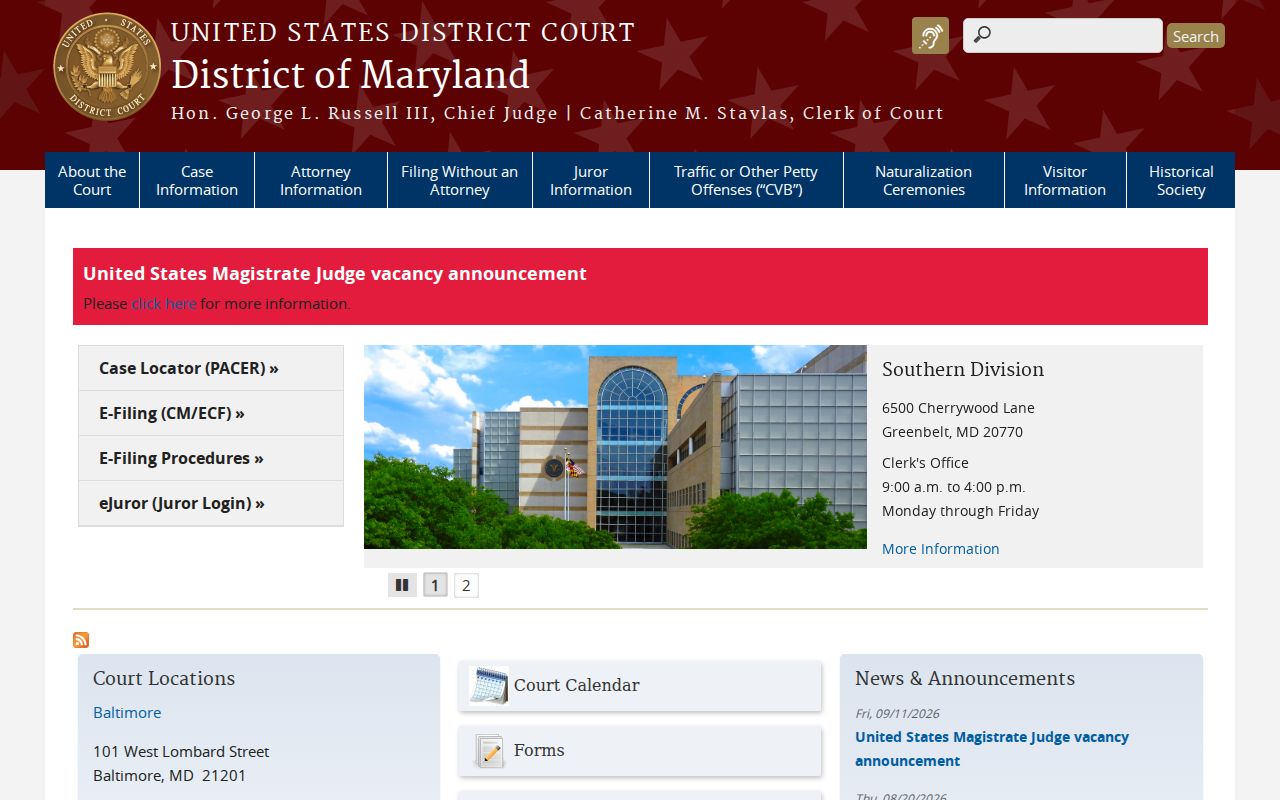
There is one more wrinkle on the federal side. A federal filing can be sealed, so even a docket search may come back empty. Start at mdd.uscourts.gov for that system. Local police records are a third category altogether. The County Police Central Records office, 8495 Veterans Highway in Millersville, handles incident and report requests. It does not hold the sheriff's warrant records.
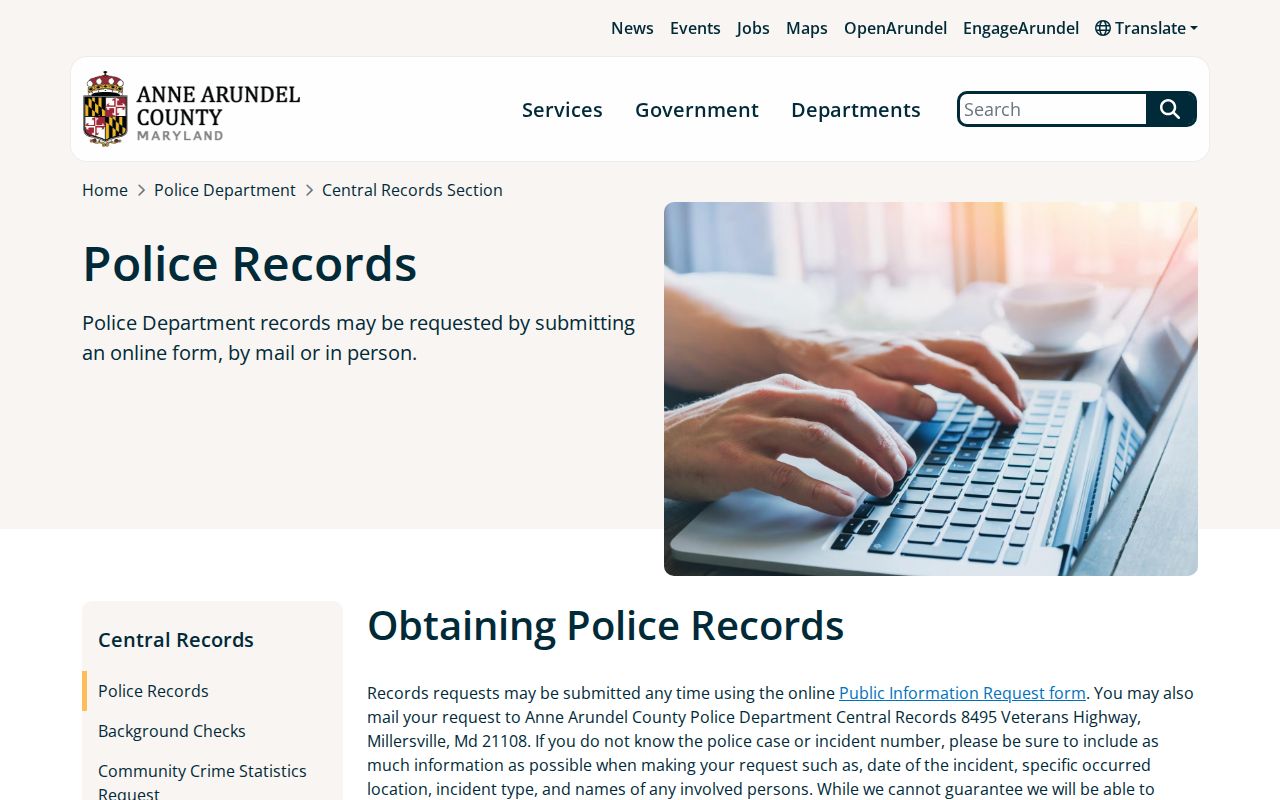
Anne Arundel County routes record requests through the police records page at aacounty.org/police-department/central-records/police-records. Neither that desk nor a federal docket can confirm a live warrant status.